Buy bestcleaningmanchester.co.uk ?
We are moving the project
bestcleaningmanchester.co.uk .
Are you interested in purchasing the domain
bestcleaningmanchester.co.uk ?
domain@kv-gmbh.de · 0541-91531010
Buy bestcleaningmanchester.co.uk ?
What are math coefficients?
Math coefficients are the numerical factors that are multiplied by variables in algebraic expressions or equations. They represent the scale or magnitude of the variable in the expression. For example, in the expression 3x + 5, the coefficient of x is 3. Coefficients are important in understanding the behavior and relationships between variables in mathematical equations and expressions. **
What are coefficients in chemistry?
In chemistry, coefficients are the numbers placed in front of chemical formulas in a balanced chemical equation. These coefficients represent the ratio of moles of each substance involved in the reaction. Coefficients are used to balance chemical equations by ensuring that the number of atoms of each element is the same on both sides of the equation. They help in determining the stoichiometry of a reaction, which is the quantitative relationship between reactants and products in a chemical reaction. **


Similar search terms for Coefficients
Top-Angebote
Products related to Coefficients:
-
Microsoft Remote Desktop Services (RDS) 2019PLEASE NOTE: RDS CAL licences require technical activation in Server Manager. These licences are not the CAL versions required for Microsoft audits – a serial number is provided for activating user or device CALs in Windows Server environments. Windows Server Remote Desktop Services 2019 is a component of the Windows Server operating system that allows users to access applications and desktops remotely. It provides a secure and scalable solution for delivering virtual desktops, session-based desktops, and remote applications to users across different devices. Here is a detailed description of Windows Server Remote Desktop Services 2019: Remote Desktop Session Host (RDSH): RDSH is a role in Windows Server that enables multiple users to access Windows desktops and applications simultaneously on a Remote Desktop Session Host server. It allows for session-based desktop deployments where users connect to a shared server and run their applications within separate sessions. Remote Desktop Virtualization Host (RDVH): RDVH is a role in Windows Server that allows for the deployment of virtual desktop infrastructure (VDI). It enables users to connect to individual virtual machines running Windows and access a personalized desktop experience. RDVH supports both pooled and personal virtual desktop deployments. Remote Desktop Web Access (RD Web Access): RD Web Access is a web-based portal that provides users with access to RemoteApp programs, virtual desktops, and session-based desktops through a web browser. Users can launch applications and desktops without the need to install any additional software on their local devices. Remote Desktop Gateway (RD Gateway): RD Gateway acts as a secure gateway between remote clients and the internal network, providing a secure connection for remote desktop and application access. It uses the Remote Desktop Protocol (RDP) over HTTPS to establish encrypted connections and authenticate users before granting access to internal resources. Remote Desktop Connection Broker (RD Connection Broker): RD Connection Broker is responsible for load balancing and connection brokering in a Remote Desktop Services deployment. It ensures that users are connected to their existing sessions when reconnecting and distributes new connection requests across multiple session hosts for optimal resource utilization. Licensing: Remote Desktop Services requires appropriate licensing to ensure compliance. In the case of Windows Server 2019, you would need Remote Desktop Services Client Access Licenses (RDS CALs) to allow users or devices to access the server. There are both User CALs and Device CALs available, depending on the licensing model that suits your organization's needs. Overall, Windows Server Remote Desktop Services 2019 provides a comprehensive solution for remote access to applications and desktops, offering flexibility, security, and centralized management capabilities. It enables organizations to deliver a seamless and productive remote...68,90 £*Shipping: 0,00 £Secure redirect to the provider
-
Microsoft Remote Desktop Services 2025 (RDS)PLEASE NOTE: RDS CAL licences require technical activation in Server Manager. These licences are not the CAL versions required for Microsoft audits – a serial number is provided for activating user or device CALs in Windows Server environments. Microsoft Remote Desktop Services (RDS) licences for the 2025 edition represent a significant step towards innovation and efficiency in IT infrastructure management. Designed to optimise remote access and application virtualisation, these licences offer a range of advanced features and capabilities that can transform the way businesses operate. Innovation and Security Advanced Security: Windows Server 2025 introduces multi-layered security with features such as Credential Guard, which protects user credentials, and Hotpatch, which allows security updates to be applied without the need for a reboot. These innovations are key to preventing cyber-attacks and ensuring the protection of sensitive data13. HybridCloud Integration: The new RDS licences support simplified resource management in hybrid cloud environments, allowing businesses to easily connect local servers to Microsoft Azure. This integration unlocks the full potential of the cloud, improving scalability and flexibility of business operations13. Key Features Optimised Remote Access: RDS allows users to access desktops and applications from anywhere, improving productivity and collaboration across distributed teams. Thanks to application virtualisation, users can use software without having to install it locally46. Consistent User Interface: The user experience has been improved with an interface that reflects the Windows 11 style, making access to remote desktop services more intuitive. Features such as Bluetooth and Wi-Fi are now integrated, further facilitating connections34. Flexible Licensing: Client Access Licences ( CALs ) are available in various models, including per-device and per-user, allowing companies to choose the option that best suits their operational needs. This flexible approach facilitates the management of licences across multiple devices56. Product Capabilities RDS licences for Windows Server 2025 not only improve security and accessibility, but also offer significant opportunities to optimise operational costs. With centralised application management and simplified access to corporate resources, organisations can reduce downtime and improve overall efficiency. In summary, Microsoft Remote Desktop Services 2025 is a state-of-the-art solution for businesses looking to modernise their IT infrastructure while ensuring security, flexibility and high performance. With these licences, organisations can meet the challenges of modern remote working with confidence and preparedness.111,90 £*Shipping: 0,00 £Secure redirect to the provider
-
Microsoft Remote Desktop Services (RDS) 2022PLEASE NOTE: RDS CAL licences require technical activation in Server Manager. These licences are not the CAL versions required for Microsoft audits – a serial number is provided for activating user or device CALs in Windows Server environments. Windows Server Remote Desktop Services (RDS) 2022 is a powerful server-based virtualization technology that enables users to access Windows desktops, applications, and data remotely from various devices. It allows organizations to deliver a rich virtual desktop infrastructure (VDI) or session-based desktops to end-users, providing a flexible and secure remote computing solution. Key Features of Windows Server Remote Desktop Services 2022: Virtual Desktop Infrastructure (VDI): Windows Server RDS 2022 allows administrators to create and manage virtual desktops that can be accessed remotely by end-users. VDI enables personalized desktop experiences and allows users to access their virtual desktops from different devices, providing a consistent and productive environment. Session-based Desktops: In addition to VDI, RDS 2022 supports session-based desktops. Session-based desktops enable multiple users to share a single server operating system while maintaining separate user sessions. This allows efficient utilization of server resources and enables cost-effective desktop delivery. RemoteApp: With RemoteApp, administrators can virtualize and deliver individual applications from a server to end-user devices. RemoteApp provides a seamless application experience, allowing users to access specific applications without the need to access an entire desktop. This feature enhances flexibility and simplifies application management. RemoteFX: RemoteFX is a technology included in Windows Server RDS 2022 that enhances the remote desktop experience by providing high-quality multimedia and graphics capabilities. It enables smooth video playback, USB redirection, and multi-monitor support, making the remote desktop experience feel more like a local desktop environment. Remote Desktop Gateway: The Remote Desktop Gateway (RD Gateway) component in RDS 2022 allows secure remote access to internal network resources over the internet. It acts as a gateway server that provides a single point of entry for remote desktop connections, ensuring encrypted and authenticated access to virtual desktops or session-based desktops. Remote Desktop Web Access: RDS 2022 includes a web-based portal called Remote Desktop Web Access (RD Web Access) that allows users to access their virtual desktops, RemoteApp programs, and published resources through a web browser. It provides a convenient and platform-independent way for users to connect to their remote desktops and applications. Scalability and Load Balancing: Windows Server RDS 2022 supports scaling and load balancing to optimize resource utilization and ensure high availability. Administrators can distribute user sessions across multiple servers, ensuring efficient use of hardware resources and...102,90 £*Shipping: 0,00 £Secure redirect to the provider
-
Uplifted Finds Epidermal Sanitization Inventory (3 Pack Hub) Epidermal Sanitization Inventory (3 Pack Hub)Optimize your pets dermatological hygiene and ocular clarity with the Epidermal Sanitization Inventory, a professionalgrade maintenance system engineered with aqueouscleansing logic. This highutility 240unit logistics package features a specialized...111,97 $*Shipping: 0,00 $Secure redirect to the provider



-
How are extinction coefficients calculated?
Extinction coefficients are calculated by measuring the absorbance of a substance at a specific wavelength using a spectrophotometer. The absorbance value is then used in the Beer-Lambert law equation, A = εlc, where A is the absorbance, ε is the extinction coefficient, l is the path length of the sample, and c is the concentration of the substance. By rearranging the equation, the extinction coefficient (ε) can be calculated by dividing the absorbance (A) by the product of the path length (l) and concentration (c) of the substance. **
-
How do I determine the coefficients?
To determine the coefficients in a mathematical equation, you can use various methods depending on the type of equation. For linear equations, you can use the method of substitution or elimination to solve for the coefficients. For quadratic equations, you can use the method of completing the square or the quadratic formula to find the coefficients. In general, you can also use regression analysis or curve fitting techniques to determine the coefficients in a more complex equation. **
-
How do you determine the coefficients?
The coefficients in a mathematical equation are determined through a process called regression analysis. This involves using statistical techniques to find the best-fitting line or curve that represents the relationship between the variables in the equation. The coefficients are then calculated based on the data points and the specific regression model being used, such as linear regression or polynomial regression. The goal is to find the coefficients that minimize the difference between the predicted values from the model and the actual observed values in the data. **
-
How do you calculate the extinction coefficients?
The extinction coefficient, also known as molar absorptivity, is calculated using the Beer-Lambert law, which relates the absorbance of a substance to its concentration and the path length of the sample. The formula for calculating the extinction coefficient is ε = A / (c * l), where ε is the extinction coefficient, A is the absorbance, c is the concentration, and l is the path length. By measuring the absorbance of a known concentration of the substance at a specific path length, the extinction coefficient can be determined. This value is important for quantifying the concentration of a substance in a solution using spectrophotometry. **

What is the problem with the coefficients?
The problem with the coefficients is that they can be sensitive to the scale of the input variables. This means that if the input variables are on different scales, the coefficients may not accurately represent the true relationship between the variables and the target. Additionally, coefficients can be difficult to interpret when the input variables are not standardized, making it challenging to compare the impact of different variables on the target. Standardizing the input variables can help address these issues by putting them on the same scale and making the coefficients more interpretable and comparable. **
How do you get to the coefficients here?
To get the coefficients in a linear regression model, we use a method called ordinary least squares (OLS). This method minimizes the sum of the squared differences between the observed values and the values predicted by the model. By minimizing this sum, we can find the coefficients that best fit the data. The coefficients represent the relationship between the independent variables and the dependent variable in the model. **
Top-Angebote
Products related to Coefficients:
-
Cleaning Cart, 3-Shelf Commercial Janitorial Cart, 200 lbs Capacity Plastic Housekeeping Cart, with 25 Gallon PVC Bag3-Shelf Cleaning Cart: Do you always forget sanitary tools when cleaning? Organize your cleaning and increase efficiency with this multipurpose janitorial cart. The three-shelf design keeps cleaning tools organized.143,49 $*Shipping: 0,00 $Secure redirect to the provider
-
Uplifted Finds Phyto Dermal Dental Sanitization Hub Phyto Dermal Dental Sanitization HubOptimize your pets oral hygiene and metabolic relaxation with the PhytoDermal Dental Sanitization Hub, a professionalgrade mastication module engineered with biologicalabrasion logic. This highutility enrichment unit features a specialized pure...35,97 $*Shipping: 0,00 $Secure redirect to the provider
-
Microsoft Remote Desktop Services (RDS) 2019PLEASE NOTE: RDS CAL licences require technical activation in Server Manager. These licences are not the CAL versions required for Microsoft audits – a serial number is provided for activating user or device CALs in Windows Server environments. Windows Server Remote Desktop Services 2019 is a component of the Windows Server operating system that allows users to access applications and desktops remotely. It provides a secure and scalable solution for delivering virtual desktops, session-based desktops, and remote applications to users across different devices. Here is a detailed description of Windows Server Remote Desktop Services 2019: Remote Desktop Session Host (RDSH): RDSH is a role in Windows Server that enables multiple users to access Windows desktops and applications simultaneously on a Remote Desktop Session Host server. It allows for session-based desktop deployments where users connect to a shared server and run their applications within separate sessions. Remote Desktop Virtualization Host (RDVH): RDVH is a role in Windows Server that allows for the deployment of virtual desktop infrastructure (VDI). It enables users to connect to individual virtual machines running Windows and access a personalized desktop experience. RDVH supports both pooled and personal virtual desktop deployments. Remote Desktop Web Access (RD Web Access): RD Web Access is a web-based portal that provides users with access to RemoteApp programs, virtual desktops, and session-based desktops through a web browser. Users can launch applications and desktops without the need to install any additional software on their local devices. Remote Desktop Gateway (RD Gateway): RD Gateway acts as a secure gateway between remote clients and the internal network, providing a secure connection for remote desktop and application access. It uses the Remote Desktop Protocol (RDP) over HTTPS to establish encrypted connections and authenticate users before granting access to internal resources. Remote Desktop Connection Broker (RD Connection Broker): RD Connection Broker is responsible for load balancing and connection brokering in a Remote Desktop Services deployment. It ensures that users are connected to their existing sessions when reconnecting and distributes new connection requests across multiple session hosts for optimal resource utilization. Licensing: Remote Desktop Services requires appropriate licensing to ensure compliance. In the case of Windows Server 2019, you would need Remote Desktop Services Client Access Licenses (RDS CALs) to allow users or devices to access the server. There are both User CALs and Device CALs available, depending on the licensing model that suits your organization's needs. Overall, Windows Server Remote Desktop Services 2019 provides a comprehensive solution for remote access to applications and desktops, offering flexibility, security, and centralized management capabilities. It enables organizations to deliver a seamless and productive remote...68,90 £*Shipping: 0,00 £Secure redirect to the provider
-
Microsoft Remote Desktop Services 2025 (RDS)PLEASE NOTE: RDS CAL licences require technical activation in Server Manager. These licences are not the CAL versions required for Microsoft audits – a serial number is provided for activating user or device CALs in Windows Server environments. Microsoft Remote Desktop Services (RDS) licences for the 2025 edition represent a significant step towards innovation and efficiency in IT infrastructure management. Designed to optimise remote access and application virtualisation, these licences offer a range of advanced features and capabilities that can transform the way businesses operate. Innovation and Security Advanced Security: Windows Server 2025 introduces multi-layered security with features such as Credential Guard, which protects user credentials, and Hotpatch, which allows security updates to be applied without the need for a reboot. These innovations are key to preventing cyber-attacks and ensuring the protection of sensitive data13. HybridCloud Integration: The new RDS licences support simplified resource management in hybrid cloud environments, allowing businesses to easily connect local servers to Microsoft Azure. This integration unlocks the full potential of the cloud, improving scalability and flexibility of business operations13. Key Features Optimised Remote Access: RDS allows users to access desktops and applications from anywhere, improving productivity and collaboration across distributed teams. Thanks to application virtualisation, users can use software without having to install it locally46. Consistent User Interface: The user experience has been improved with an interface that reflects the Windows 11 style, making access to remote desktop services more intuitive. Features such as Bluetooth and Wi-Fi are now integrated, further facilitating connections34. Flexible Licensing: Client Access Licences ( CALs ) are available in various models, including per-device and per-user, allowing companies to choose the option that best suits their operational needs. This flexible approach facilitates the management of licences across multiple devices56. Product Capabilities RDS licences for Windows Server 2025 not only improve security and accessibility, but also offer significant opportunities to optimise operational costs. With centralised application management and simplified access to corporate resources, organisations can reduce downtime and improve overall efficiency. In summary, Microsoft Remote Desktop Services 2025 is a state-of-the-art solution for businesses looking to modernise their IT infrastructure while ensuring security, flexibility and high performance. With these licences, organisations can meet the challenges of modern remote working with confidence and preparedness.111,90 £*Shipping: 0,00 £Secure redirect to the provider
-
What are math coefficients?
Math coefficients are the numerical factors that are multiplied by variables in algebraic expressions or equations. They represent the scale or magnitude of the variable in the expression. For example, in the expression 3x + 5, the coefficient of x is 3. Coefficients are important in understanding the behavior and relationships between variables in mathematical equations and expressions. **
-
What are coefficients in chemistry?
In chemistry, coefficients are the numbers placed in front of chemical formulas in a balanced chemical equation. These coefficients represent the ratio of moles of each substance involved in the reaction. Coefficients are used to balance chemical equations by ensuring that the number of atoms of each element is the same on both sides of the equation. They help in determining the stoichiometry of a reaction, which is the quantitative relationship between reactants and products in a chemical reaction. **
-
How are extinction coefficients calculated?
Extinction coefficients are calculated by measuring the absorbance of a substance at a specific wavelength using a spectrophotometer. The absorbance value is then used in the Beer-Lambert law equation, A = εlc, where A is the absorbance, ε is the extinction coefficient, l is the path length of the sample, and c is the concentration of the substance. By rearranging the equation, the extinction coefficient (ε) can be calculated by dividing the absorbance (A) by the product of the path length (l) and concentration (c) of the substance. **
-
How do I determine the coefficients?
To determine the coefficients in a mathematical equation, you can use various methods depending on the type of equation. For linear equations, you can use the method of substitution or elimination to solve for the coefficients. For quadratic equations, you can use the method of completing the square or the quadratic formula to find the coefficients. In general, you can also use regression analysis or curve fitting techniques to determine the coefficients in a more complex equation. **
Similar search terms for Coefficients
-
Microsoft Remote Desktop Services (RDS) 2022PLEASE NOTE: RDS CAL licences require technical activation in Server Manager. These licences are not the CAL versions required for Microsoft audits – a serial number is provided for activating user or device CALs in Windows Server environments. Windows Server Remote Desktop Services (RDS) 2022 is a powerful server-based virtualization technology that enables users to access Windows desktops, applications, and data remotely from various devices. It allows organizations to deliver a rich virtual desktop infrastructure (VDI) or session-based desktops to end-users, providing a flexible and secure remote computing solution. Key Features of Windows Server Remote Desktop Services 2022: Virtual Desktop Infrastructure (VDI): Windows Server RDS 2022 allows administrators to create and manage virtual desktops that can be accessed remotely by end-users. VDI enables personalized desktop experiences and allows users to access their virtual desktops from different devices, providing a consistent and productive environment. Session-based Desktops: In addition to VDI, RDS 2022 supports session-based desktops. Session-based desktops enable multiple users to share a single server operating system while maintaining separate user sessions. This allows efficient utilization of server resources and enables cost-effective desktop delivery. RemoteApp: With RemoteApp, administrators can virtualize and deliver individual applications from a server to end-user devices. RemoteApp provides a seamless application experience, allowing users to access specific applications without the need to access an entire desktop. This feature enhances flexibility and simplifies application management. RemoteFX: RemoteFX is a technology included in Windows Server RDS 2022 that enhances the remote desktop experience by providing high-quality multimedia and graphics capabilities. It enables smooth video playback, USB redirection, and multi-monitor support, making the remote desktop experience feel more like a local desktop environment. Remote Desktop Gateway: The Remote Desktop Gateway (RD Gateway) component in RDS 2022 allows secure remote access to internal network resources over the internet. It acts as a gateway server that provides a single point of entry for remote desktop connections, ensuring encrypted and authenticated access to virtual desktops or session-based desktops. Remote Desktop Web Access: RDS 2022 includes a web-based portal called Remote Desktop Web Access (RD Web Access) that allows users to access their virtual desktops, RemoteApp programs, and published resources through a web browser. It provides a convenient and platform-independent way for users to connect to their remote desktops and applications. Scalability and Load Balancing: Windows Server RDS 2022 supports scaling and load balancing to optimize resource utilization and ensure high availability. Administrators can distribute user sessions across multiple servers, ensuring efficient use of hardware resources and...102,90 £*Shipping: 0,00 £Secure redirect to the provider
-
Uplifted Finds Epidermal Sanitization Inventory (3 Pack Hub) Epidermal Sanitization Inventory (3 Pack Hub)Optimize your pets dermatological hygiene and ocular clarity with the Epidermal Sanitization Inventory, a professionalgrade maintenance system engineered with aqueouscleansing logic. This highutility 240unit logistics package features a specialized...111,97 $*Shipping: 0,00 $Secure redirect to the provider
-
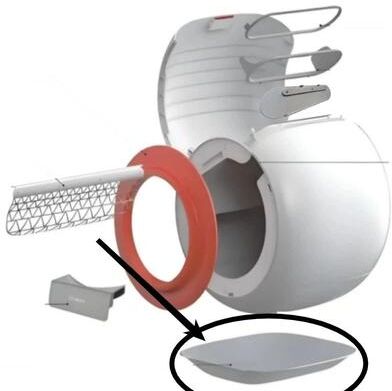
Uplift Essentials Smart Self Cleaning Litter Box Replacement Accessories & Maintenance Parts q clean matKeep your automated pet care system running at peak performance with our specialized automatic litter box accessories collection. Maintaining a clean and hygienic environment for your cat is essential, and these precision components are designed to...86,97 $*Shipping: 0,00 $Secure redirect to the provider
-
How do you determine the coefficients?
The coefficients in a mathematical equation are determined through a process called regression analysis. This involves using statistical techniques to find the best-fitting line or curve that represents the relationship between the variables in the equation. The coefficients are then calculated based on the data points and the specific regression model being used, such as linear regression or polynomial regression. The goal is to find the coefficients that minimize the difference between the predicted values from the model and the actual observed values in the data. **
-
How do you calculate the extinction coefficients?
The extinction coefficient, also known as molar absorptivity, is calculated using the Beer-Lambert law, which relates the absorbance of a substance to its concentration and the path length of the sample. The formula for calculating the extinction coefficient is ε = A / (c * l), where ε is the extinction coefficient, A is the absorbance, c is the concentration, and l is the path length. By measuring the absorbance of a known concentration of the substance at a specific path length, the extinction coefficient can be determined. This value is important for quantifying the concentration of a substance in a solution using spectrophotometry. **
-
What is the problem with the coefficients?
The problem with the coefficients is that they can be sensitive to the scale of the input variables. This means that if the input variables are on different scales, the coefficients may not accurately represent the true relationship between the variables and the target. Additionally, coefficients can be difficult to interpret when the input variables are not standardized, making it challenging to compare the impact of different variables on the target. Standardizing the input variables can help address these issues by putting them on the same scale and making the coefficients more interpretable and comparable. **
-
How do you get to the coefficients here?
To get the coefficients in a linear regression model, we use a method called ordinary least squares (OLS). This method minimizes the sum of the squared differences between the observed values and the values predicted by the model. By minimizing this sum, we can find the coefficients that best fit the data. The coefficients represent the relationship between the independent variables and the dependent variable in the model. **
* All prices are inclusive of VAT and, if applicable, plus shipping costs. The offer information is based on the details provided by the respective shop and is updated through automated processes. Real-time updates do not occur, so deviations can occur in individual cases. ** Note: Parts of this content were created by AI.